

OCD support, tools, and specialists. Built for Recovery.

How does the app help?
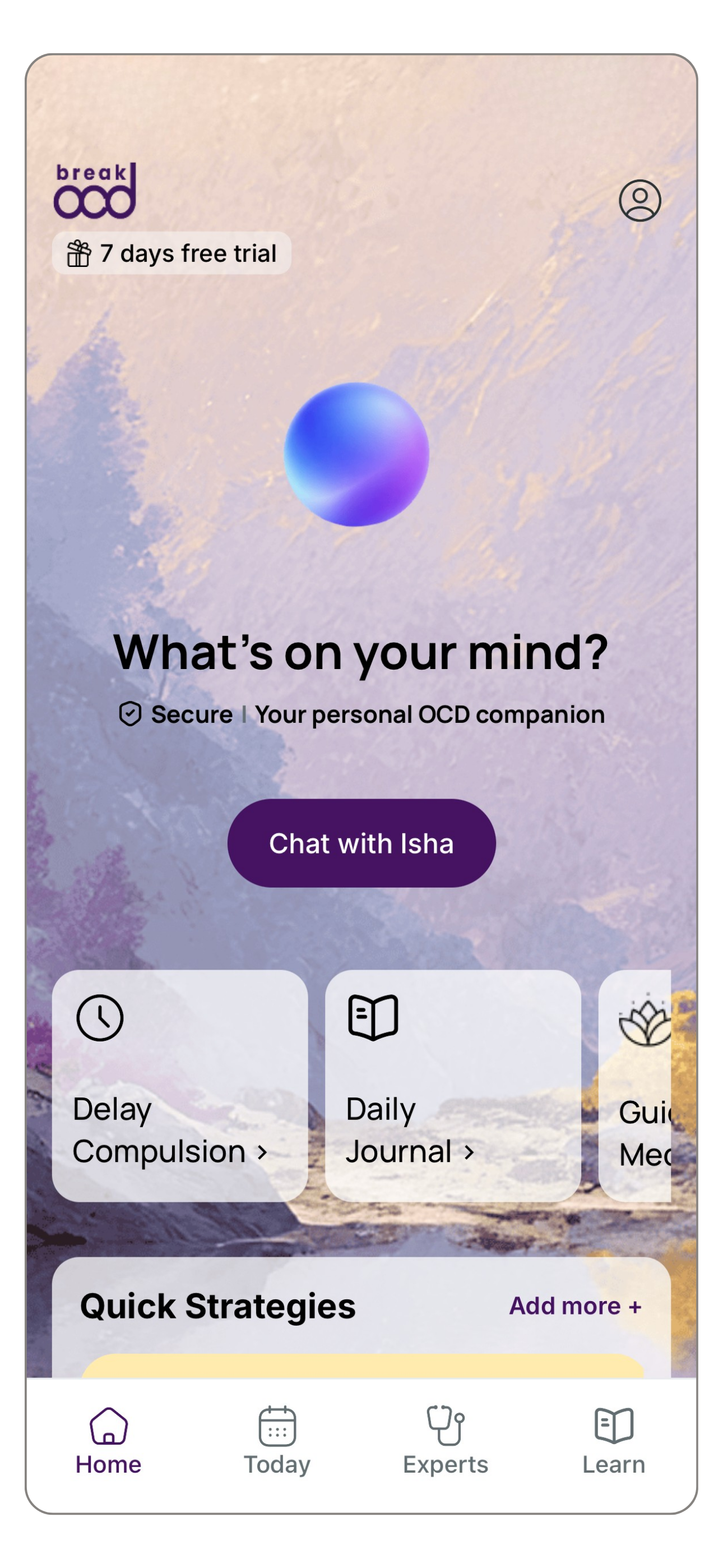
breakOCD is designed specifically for OCD. Here’s how to get the most out of it:
-
![]()
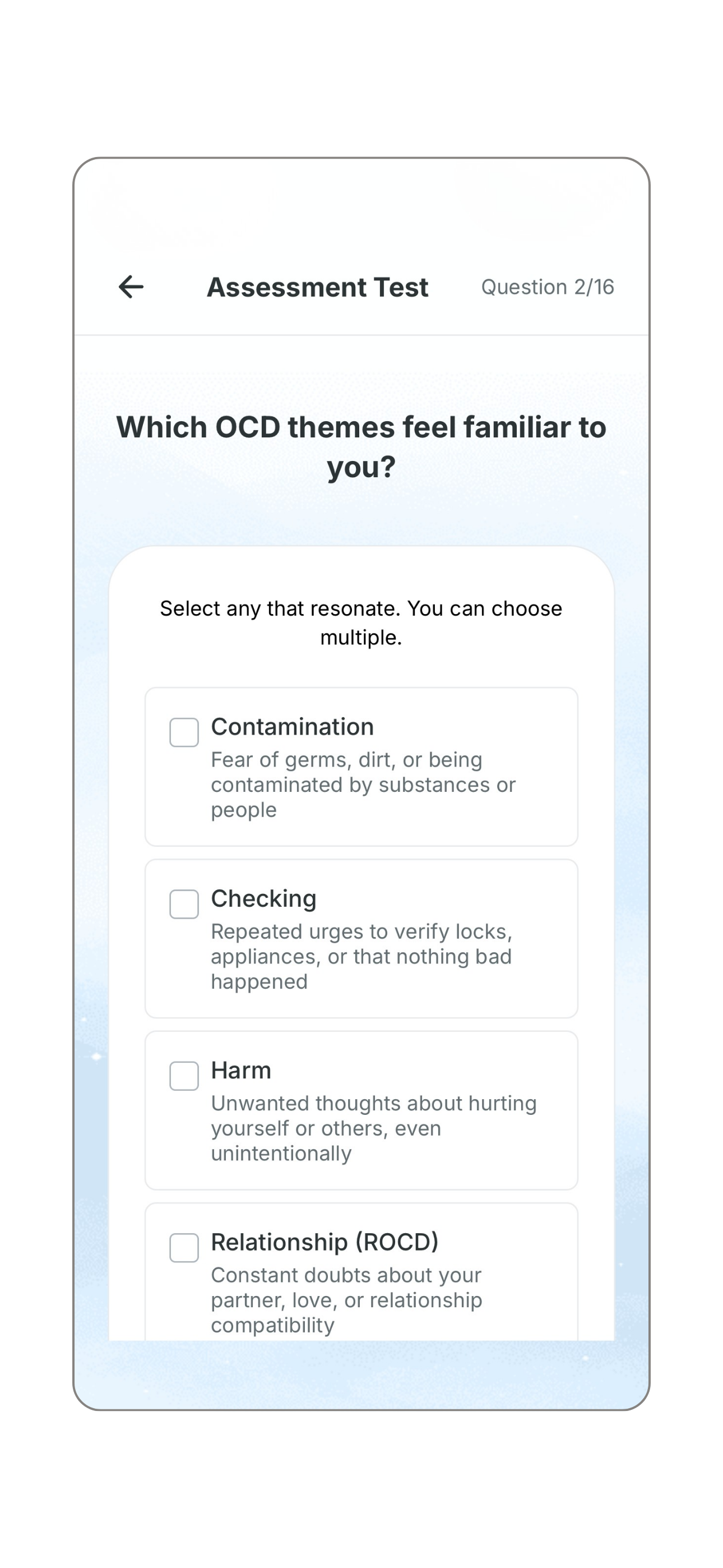
Personalize your experience
Start with a quick assessment built to understand your specific experience with OCD, your themes, your patterns, so the app fits you rather than treating everyone the same. Your responses stay private.
-
![]()
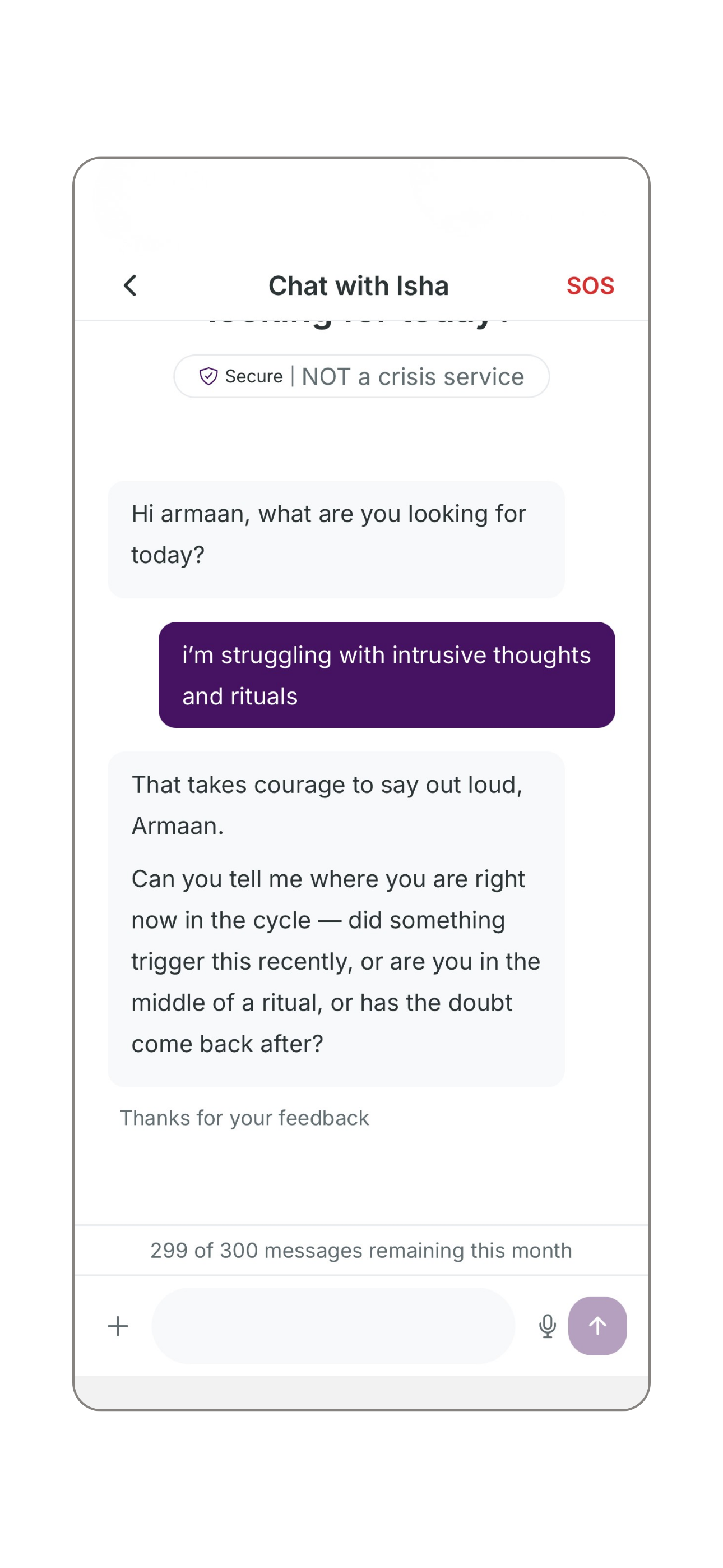
Isha, an AI companion trained on OCD
You can share whatever's on your mind: an intrusive thought, a spiral, a hard moment, any time, with no judgment. She knows the correct ways to support you, backed by science. It may feel uncomfortable but that’s how OCD gets weaker. (Note: Isha is AI and can make mistakes)
-
![]()
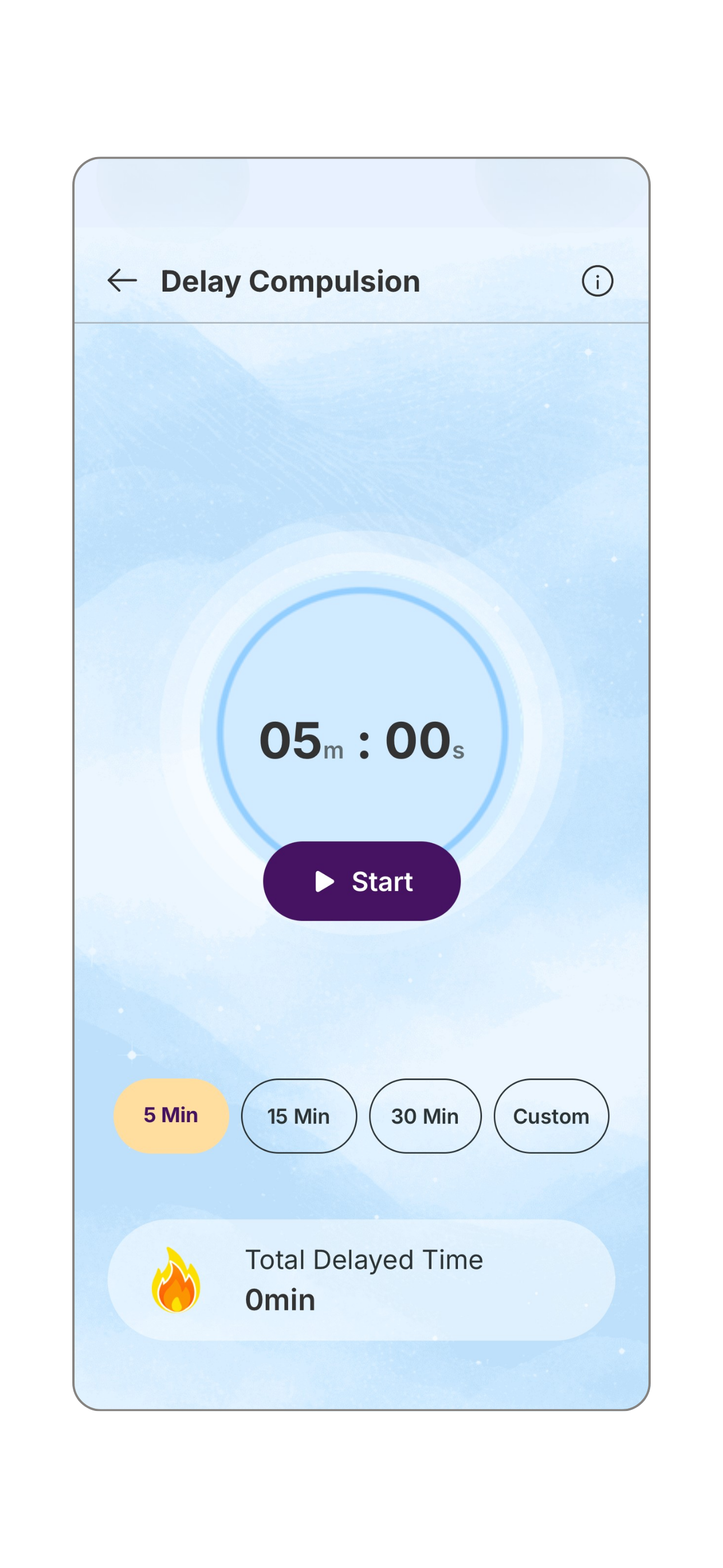
Delay Compulsion Timer
Use this when the urge to wash your hands, pray again, repeat, count, etc is high. Delay that urge for as long as you can. You don’t have to look at the timer the whole time. Call a friend, watch tv, do anythign but the compulsion. Your wins add up and OCD weakens.
-
![]()
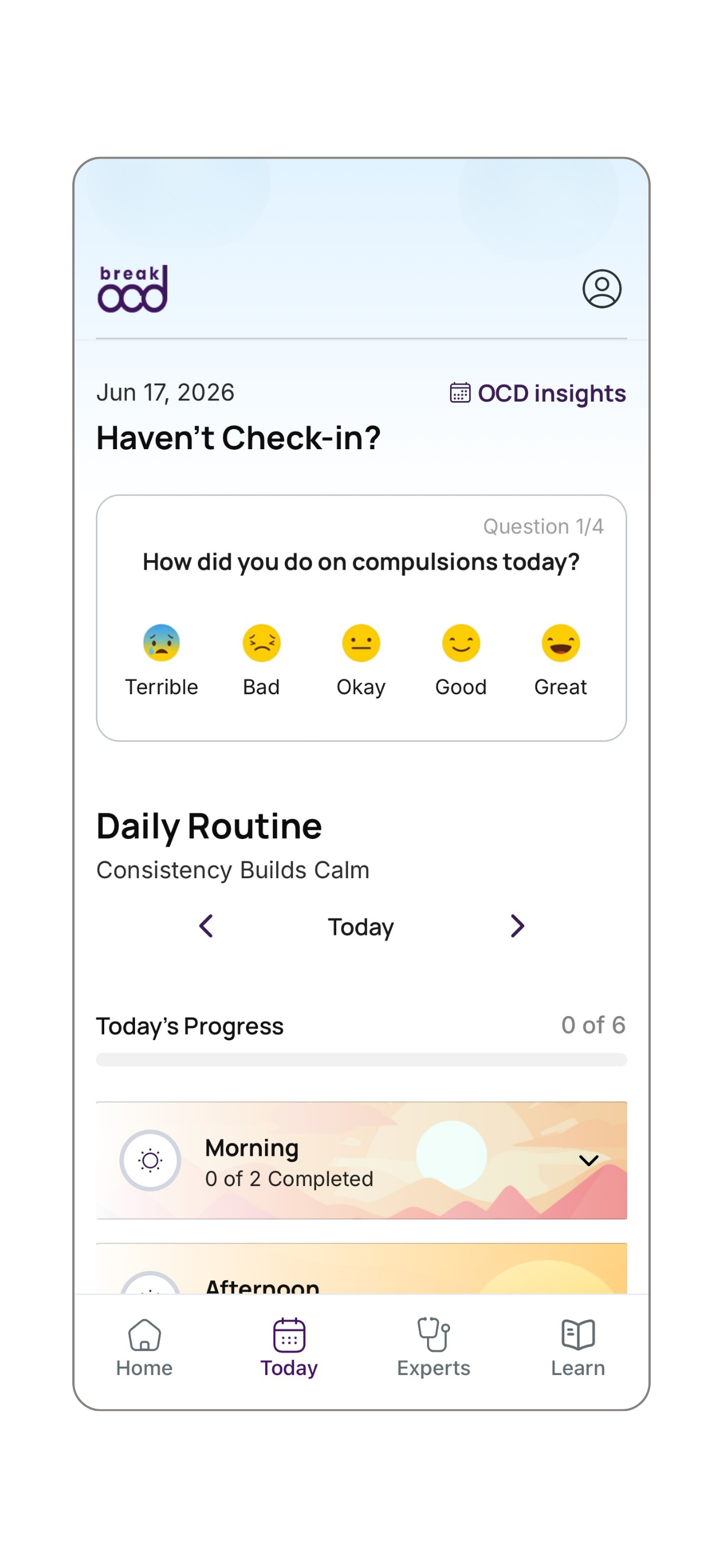
Today Section
This is where you quantify your journey and build insights. You will have an honest record of your progress even when OCD tries to tell you nothing counted. You can also plan your day/routine here so you can take back the parts of your life OCD has narrowed.
-
![]()
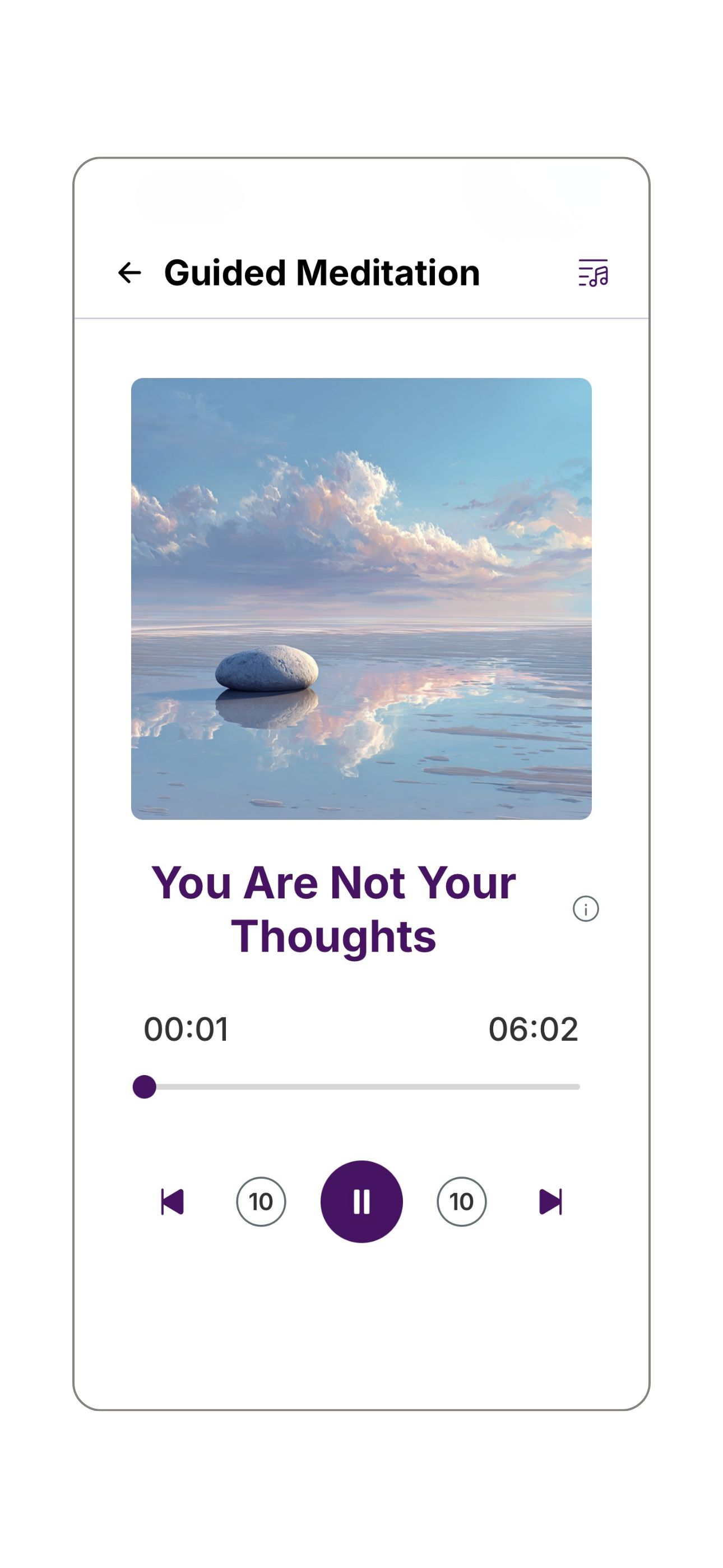
Guided Meditations:
These meditations are made specifically for OCD by our experts. You learn the truth about OCD, and start to recognize yourself outside OCD, and create distance between you and these thoughts.
-
![]()
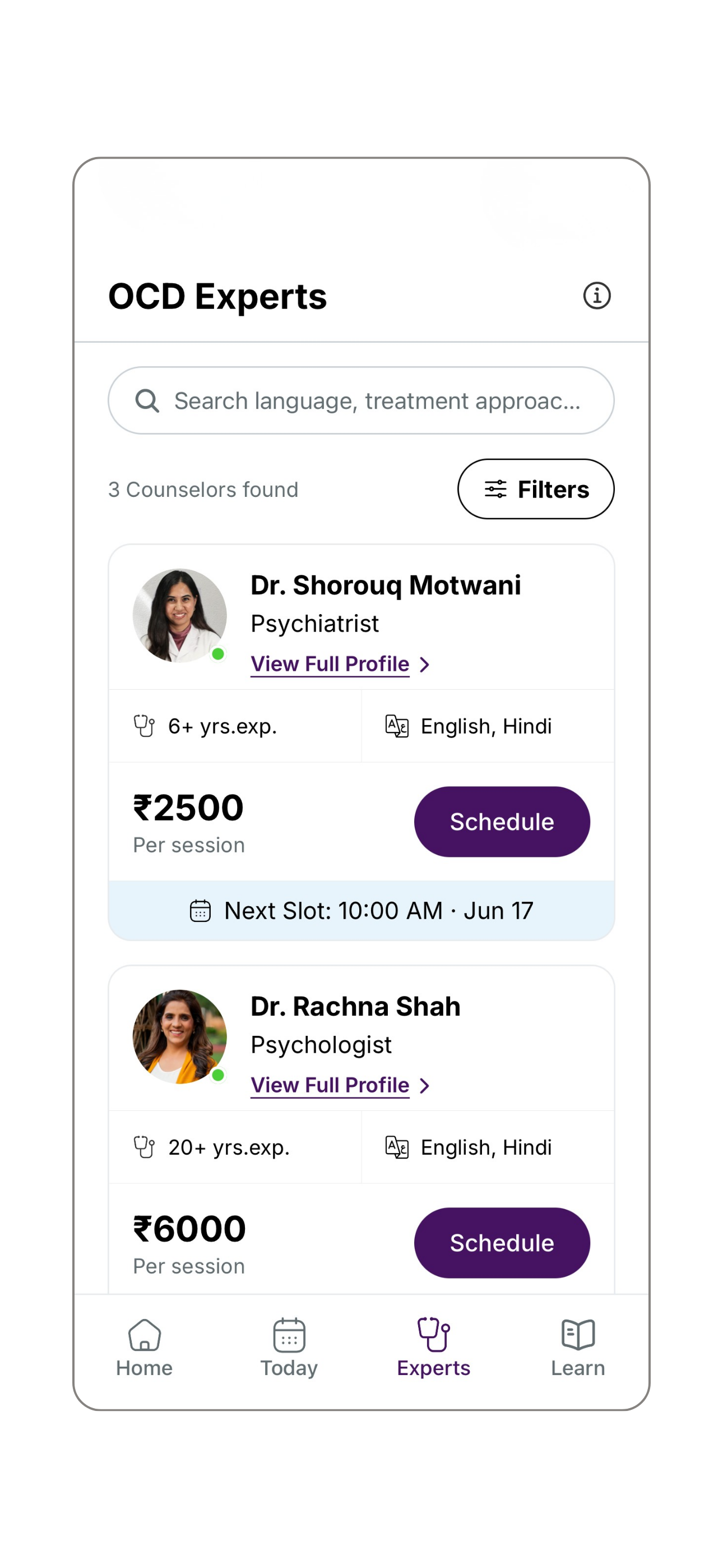
Experts (India Only)
When you're ready for professional support, you can connect with therapists and psychiatrists who genuinely understand OCD and won't judge you. Available in India. -
![]()
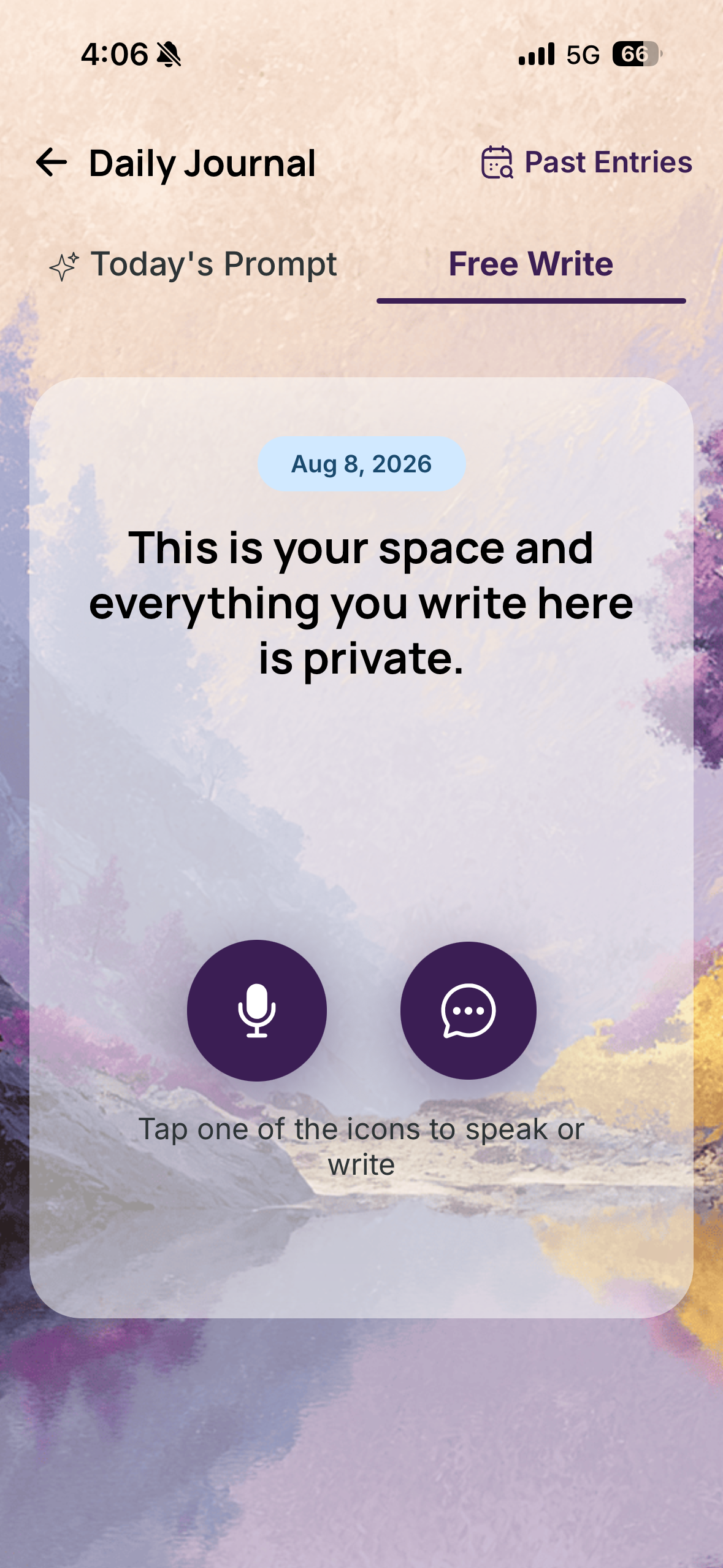
Journal
The daily prompt helps you notice the good in your day, the small wins OCD wants you to forget. The free-write is for letting a thought out and leaving it there, no re-reading, no analyzing, just getting it onto the page and closing it. On paper, a thought is just words. It's all private.
-
![]()
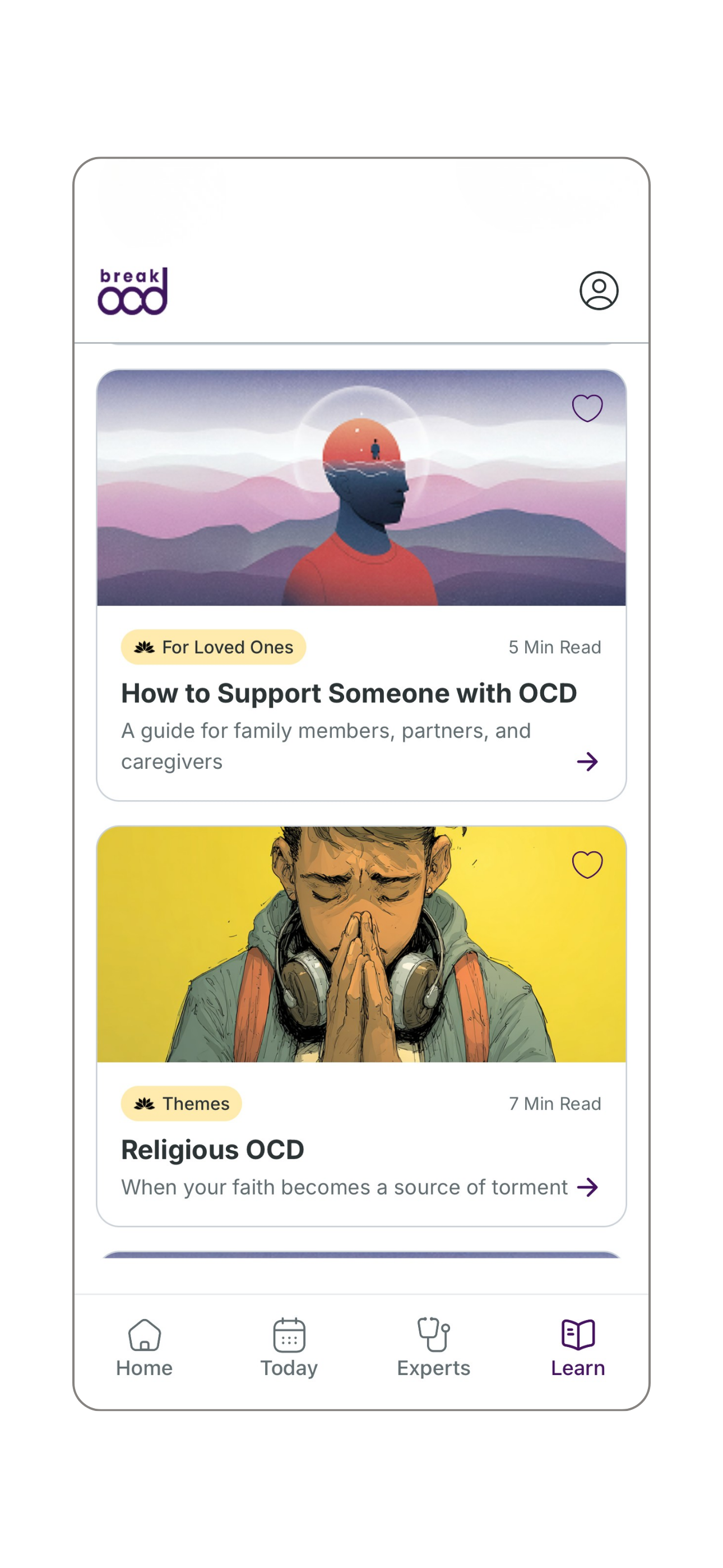
Learn
Clinically reviewed articles for you and your loved ones to better understand OCD. We know how hard it is to explain your experience to someone. These articles can help.

OCD Specific
We have one job: to help people with OCD
24/7 Support
Beyond the one hour/week of therapy
ERP
The gold standard of treatment, at the core of breakOCD

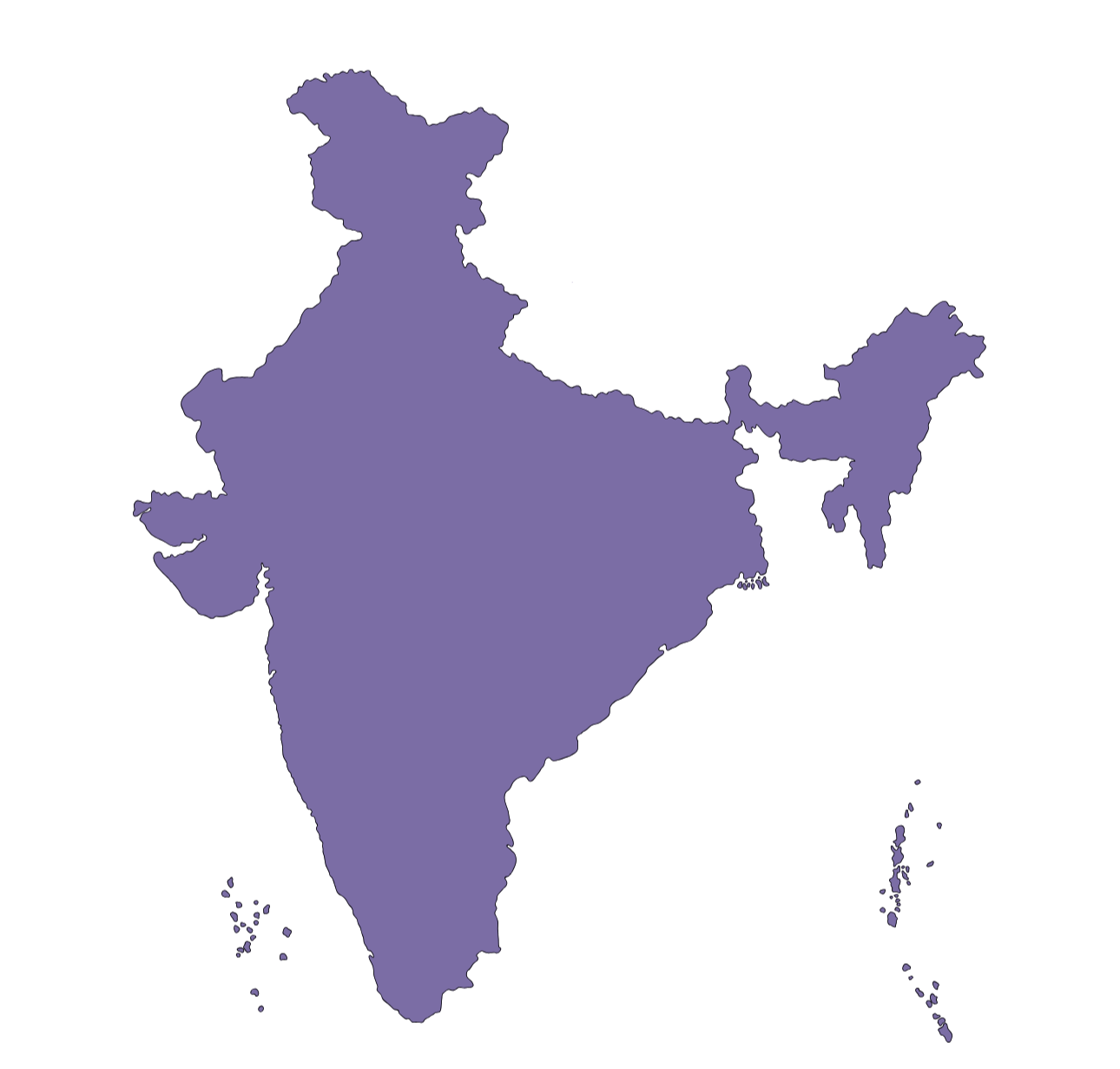
For the millions living in India with OCD, without access to the right help
The reality of OCD in India
Most people with OCD in India spend years being told it's anxiety, stress, or overthinking.
7 years
On average, to get the right OCD diagnosis
3%
Around 3% of the global population has OCD
Disability
OCD is now recognized as a disability in India.
Top 10
OCD has historically been ranked in the top 10 most disabling illnesses by the WHO.

Meet Isha
An AI companion that understands you.
Isha is your OCD companion, here whenever the thoughts get loud. She will not flinch, judge, or hand you the reassurance your OCD is fishing for. She is built around ERP, the approach that actually works for OCD, so she helps you sit with the discomfort instead of trying to argue it away.
Note: Isha is not a replacement for professional therapy. She works best alongside it. Isha is AI and can make mistakes.
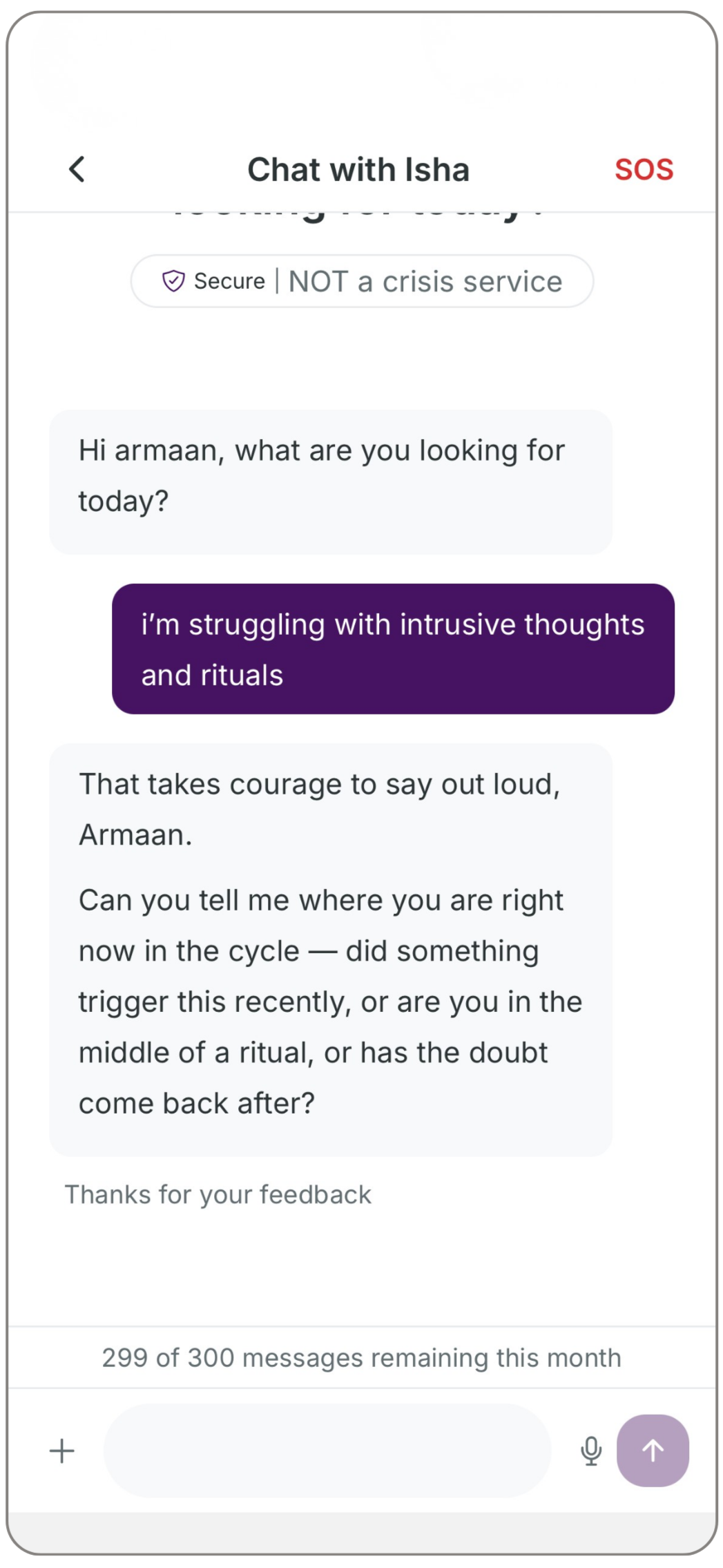

Hi I am Isha!
Meet Our Founder
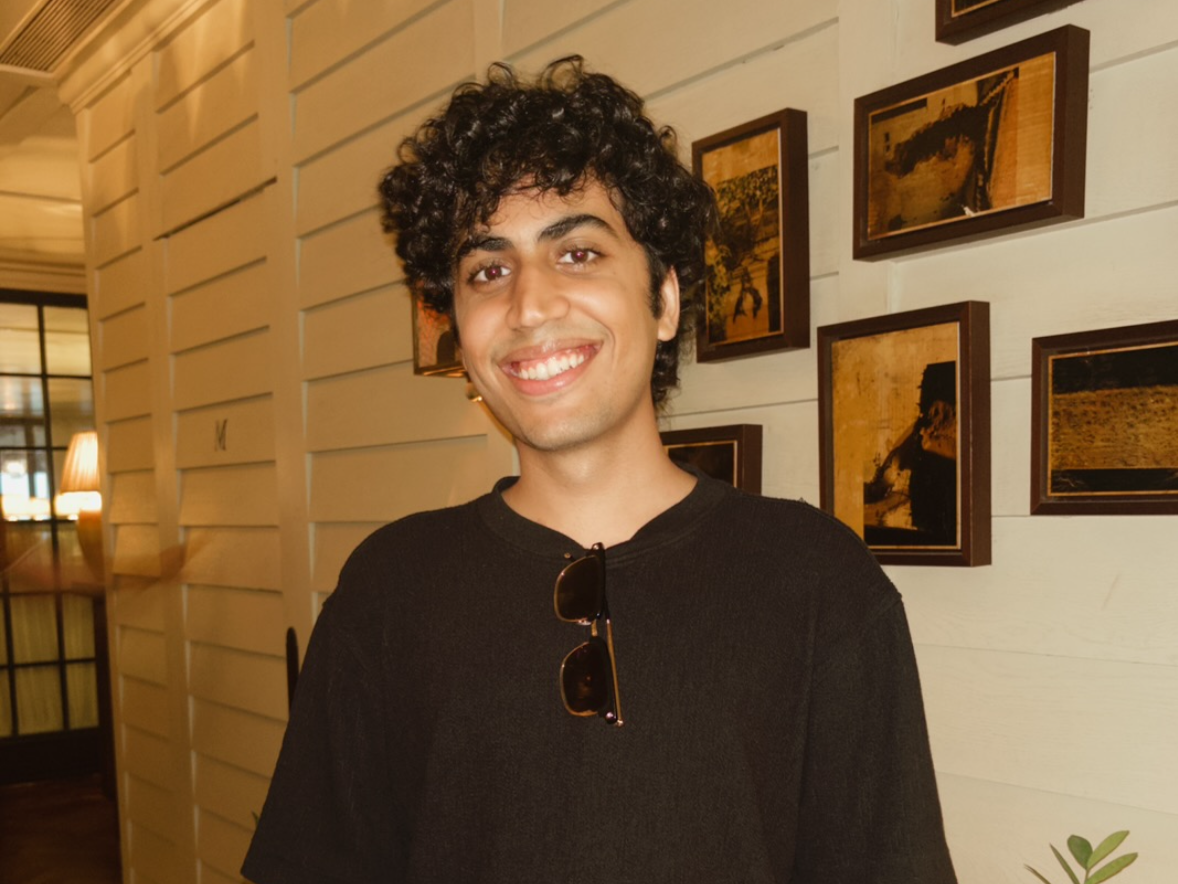
“Today I can proudly say I have OCD but OCD does not have me.”
Armaan Raheja






Acknowledgment and Gratitude
We’d like to thank our renowned panel and advisors for their contributions to making this possible. The biggest thank you to Dr. Sachi Pandya, Dr. Shorouq Motwani, Jehanzeb Baldiwala, Dr. Pervin Dadachanji, Dr. Mrinalini Purandare, Somini Mehta, and many more.

Frequently Asked Questions
-
No, breakOCD is not a replacement for professional therapy.
breakOCD gives users access to evidence-based self-help tools personalized for their experience, as well as a network of professionals with OCD expertise in India.
The app works best when users pair self help, education, and professional help.
-
Yes, the evidence-based tools on breakOCD can help with all major OCD themes including but not limited to:
Contamination OCD
Harm OCD
Relationship OCD
Sexual OCD
Religious OCD
Moral OCD
Health OCD
POCD
Sensorimotor OCD
Symmetry OCD.
Pure OCD.
We recognize that intrusive thoughts come in various forms and attack a person’s core values, leading to compulsions/rituals of different forms. We are also aware that the themes of these thoughts can switch.
We focus on the underlying patterns rather than the specific content of thoughts. This means that whether someone struggles with fear of illness, death, harm, sexual thoughts, blasphemy, perfectionism, symmetry, etc, the same evidence-based principles apply.
breakOCD helps users identify their personal patterns, track their symptoms, practice skills, and get specialized help to manage OCD in India.
-
OCD and anxiety share some features, including intrusive thoughts and significant distress, but they are clinically distinct conditions that respond to different treatments. Anxiety tends to involve worry about real-world threats that, while disproportionate, relate to genuinely possible outcomes. OCD involves intrusive thoughts that feel deeply contrary to the person's own values, combined with compulsive behaviors or mental rituals aimed at gaining certainty or relief. The key difference is the compulsion. OCD is maintained by the cycle of intrusion, anxiety, and compulsive response. General anxiety treatment is not sufficient for OCD. ERP, specifically designed for OCD, is required.
-
One of the most common fears that comes with OCD is the fear of being misunderstood, or even worse, the fear of being judged.
At breakOCD, all our therapists are carefully handpicked as professionals with experience treating OCD in India.
They have heard a multitude of experiences and understand how difficult and isolating intrusive thoughts can be.
Our therapists use the gold standard for OCD treatment - Exposure and Response Prevention Treatment (ERP)- as well as EMDR (for people who have experienced trauma along with OCD).
-
The cost of OCD therapy in India varies depending on whether you see a psychologist or psychiatrist, their level of experience, your city, and the type of treatment involved. As a general guide, sessions with OCD-trained psychologists in Indian metro cities typically range from ₹1,500 to ₹4,000 per session, while psychiatrist consultations may vary further.
On breakOCD, you can filter specialists by price, language, treatment type, and gender to find the right fit for your budget and needs. We are committed to making OCD-specific care more accessible in India, and our platform includes options across a range of price points.
If cost is a barrier, speak to one of our specialists about session frequency and self-help tools that can reduce the number of sessions needed while maintaining progress.
-
breakOCD was founded in 2025 by Armaan Raheja, who lived with severe OCD for over ten years before receiving the correct diagnosis and evidence-based treatment. After experiencing firsthand how fragmented and inaccessible OCD-specific care is in India, Armaan returned from studying psychology in the United States to build the resource he wished had existed.
breakOCD was built with the guidance of a panel of leading psychiatrists and psychologists across India who specialize in OCD treatment.
-
ERP, or Exposure and Response Prevention therapy, is the gold standard treatment for OCD and is recommended by leading clinical bodies worldwide including the International OCD Foundation.
ERP works by gradually helping a person face their feared thoughts or situations, which is the Exposure part, while resisting the urge to perform a compulsion in response, which is the Response Prevention part. Over time the brain learns that the feared thought is not actually dangerous and does not require a compulsive response. Anxiety rises and then naturally falls on its own, without the compulsion ever being performed. Repeated enough times, this process fundamentally changes the brain's response to intrusive thoughts.
The Response Prevention element is particularly important because it is compulsions and rituals that maintain and strengthen the OCD cycle. Every compulsion performed teaches the brain that the thought was worth responding to. ERP interrupts that learning.
breakOCD integrates ERP principles throughout the app, helping users delay compulsions, sit with discomfort, and challenge avoidance in small, manageable steps. We always recommend working through ERP with a trained specialist for the best outcomes.
-
Yes. Several of our therapists and psychiatrists specialize specifically in treating OCD in children and adolescents, and are experienced in adapting ERP for younger age groups.
OCD frequently begins in childhood or early adolescence. In India, it is often misunderstood by families and schools as behavioral problems, excessive religiosity, or anxiety, which delays proper diagnosis and treatment. Early intervention with the right specialist makes a significant difference to long-term outcomes.
For the self-help tools within the breakOCD app, we ask that users under the age of 18 use them under the supervision of a parent, guardian, or treating therapist.
If you are a parent concerned about your child, our specialists can help you understand what you are seeing and what the right next step is.
-
OCD very rarely resolves on its own and typically worsens over time without proper treatment. This is because the compulsions that provide short-term relief actually strengthen the OCD cycle each time they are performed, teaching the brain that the intrusive thought required a response. Without intervention, the cycle tends to expand: more triggers, more compulsions, more avoidance, and a progressively smaller world. The good news is that OCD is one of the most treatable mental health conditions when the right approach, specifically ERP, is applied consistently. Many people experience significant improvement within weeks of beginning proper treatment.
-
Some clinicians on the breakOCD panel are trained in EMDR and offer it as part of their practice. You can see which clinicians offer EMDR on their individual profiles in the app.
-
ERP works by gradually exposing a person to their OCD triggers and preventing the compulsive response, teaching the brain that the feared outcome does not require a compulsion to manage. EMDR works differently, focusing on reprocessing distressing memories so they lose their emotional charge. The two approaches address different aspects of distress and can complement each other in the right clinical context.